
Moratoriums, Grid Requirements, and Local Approvals
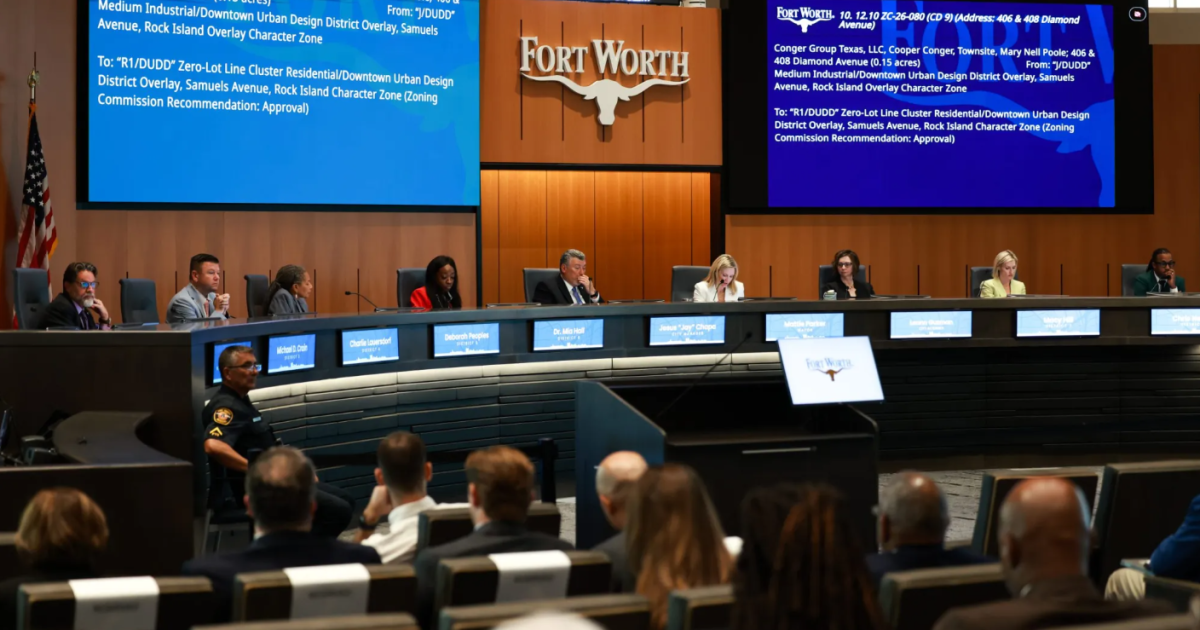
Lead Community Excerpt: Following months of calls from the public, the Fort Worth City Council unanimously approved the initial steps toward implementing a 90-day moratorium on data center construction. The pause is designed to allow city leaders time to evaluate potential development regulations and assess data centers' impacts on natural resources, infrastructure, and local quality of life.
Fort Worth Initiates Pause, Application Audits, and Advisory Committee
As reported by KERA, the Fort Worth City Council addressed data center expansion through three separate votes during a single meeting. First, council members voted unanimously to initiate the process for a 90-day moratorium on new data center construction. Expected to take effect by early next year, the moratorium halts decisions on permit requests and land rezoning applications. During this temporary hiatus, municipal staff will analyze noise levels, local water supplies, long-term water availability, land-use compatibility, and related infrastructure demands to inform future permanent ordinances.
Second, the council voted 10-1 to establish new submission rules for developers applying for predevelopment and building permits inside city limits. To comply with a directive from Governor Greg Abbott requiring state utility audits, applicants must now present verified approval for grid connection from both the Public Utility Commission of Texas and the Electric Reliability Council of Texas (ERCOT). Assistant City Manager Jesica McEachern clarified that facilities operating within Fort Worth's extraterritorial jurisdiction or utilizing municipal water outside city limits are not subject to these submission rules.
Third, council members approved a 10-1 measure establishing the Data Center & Infrastructure Committee. This advisory group will furnish evidence-based recommendations to municipal staff to help guide long-term regulations. Council Member Elizabeth Beck highlighted a collaborative approach with residents, stating,
"We are here to work with you on this... We aren't your enemy in this fight."
Additionally, State Representative Vikki Goodwin noted that the moratorium helps
"send a signal"
to state legislators regarding the need for state-level transparency and protecting households from shifted energy and water transmission costs.
Strategies from Companion Communities
Local and state governing bodies in other jurisdictions are deploying a range of procedural, legislative, and land-use strategies to address data center developments.
Statewide Moratoriums and Regulatory Frameworks: In New York, Governor Kathy Hochul placed a statewide moratorium of up to one year on environmental permits for new hyperscale data centers, according to Fox Business. The state is utilizing the pause to create a regulatory framework to safeguard utility ratepayers and manage energy demands. Representative Mike Lawler criticized the freeze, stating it sends a
"don't come here"
message to businesses considering local investment.
Legislative NDA Restrictions and Committee Reviews: Rather than passing a development moratorium, North Dakota state leaders voted to advance a proposal to temporarily outlaw non-disclosure agreements (NDAs) between developers and public officials during an upcoming special session, as reported by Yahoo. Senator Tim Mathern noted the NDA ban
"gets to the heart of concern of citizens,"
and the topic was assigned to the Artificial Intelligence and Data Centers Committee for study. A statewide development moratorium proposal failed to advance after lawmakers like Senator Janne Myrdal argued that acting
"out of fear and suspicion, instead of using discernment and wisdom... doesn't solve the problem."
Annexation and Permit Denials: In South Elgin, Illinois, the Village Board voted unanimously to deny an annexation request and a special use permit for White Rose Partners' proposed 200,000-square-foot Project Kilo facility, reported the Daily Herald. The board turned down the concept plan despite developer presentations detailing closed-loop water systems and grid capacity, following public pushback that included an opposition petition signed by more than 9,475 individuals.
Phased Approvals with Municipal Oversight: Taking a conditional approach, the Vineland Planning Board in New Jersey voted to approve Phase 2 of a Data One facility, adding 600,000 square feet to an active construction site, according to NBC10 Philadelphia. Board members cited developer responsiveness to community noise and resource complaints, pledging continued oversight as the multi-phase project proceeds toward a planned 2.6 million-square-foot buildout.
What Remains Undecided
Across the covered jurisdictions, several regulatory and legal outcomes remain pending:
In Fort Worth, the specific standards for long-term noise, water, and infrastructure ordinances remain open until staff and the newly formed advisory committee complete evaluations during the upcoming 90-day moratorium.
In North Dakota, the proposed temporary ban on development NDAs faces formal consideration during the September special legislative session, while long-term state policies remain under review by the Artificial Intelligence and Data Centers Committee ahead of 2027.
In South Elgin, developer options remain open following the annexation denial, with company legal counsel Richard Williams noting that
"all options are on the table."
In New York, the precise conditions of the state's upcoming regulatory framework regarding ratepayer protections and grid infrastructure will remain undecided throughout the ongoing permit pause.
In Vineland, ongoing monitoring of noise ordinance compliance and municipal impact will continue as construction transitions into the newly approved second phase.