
Navigating Local Responses to Data Center Proposals
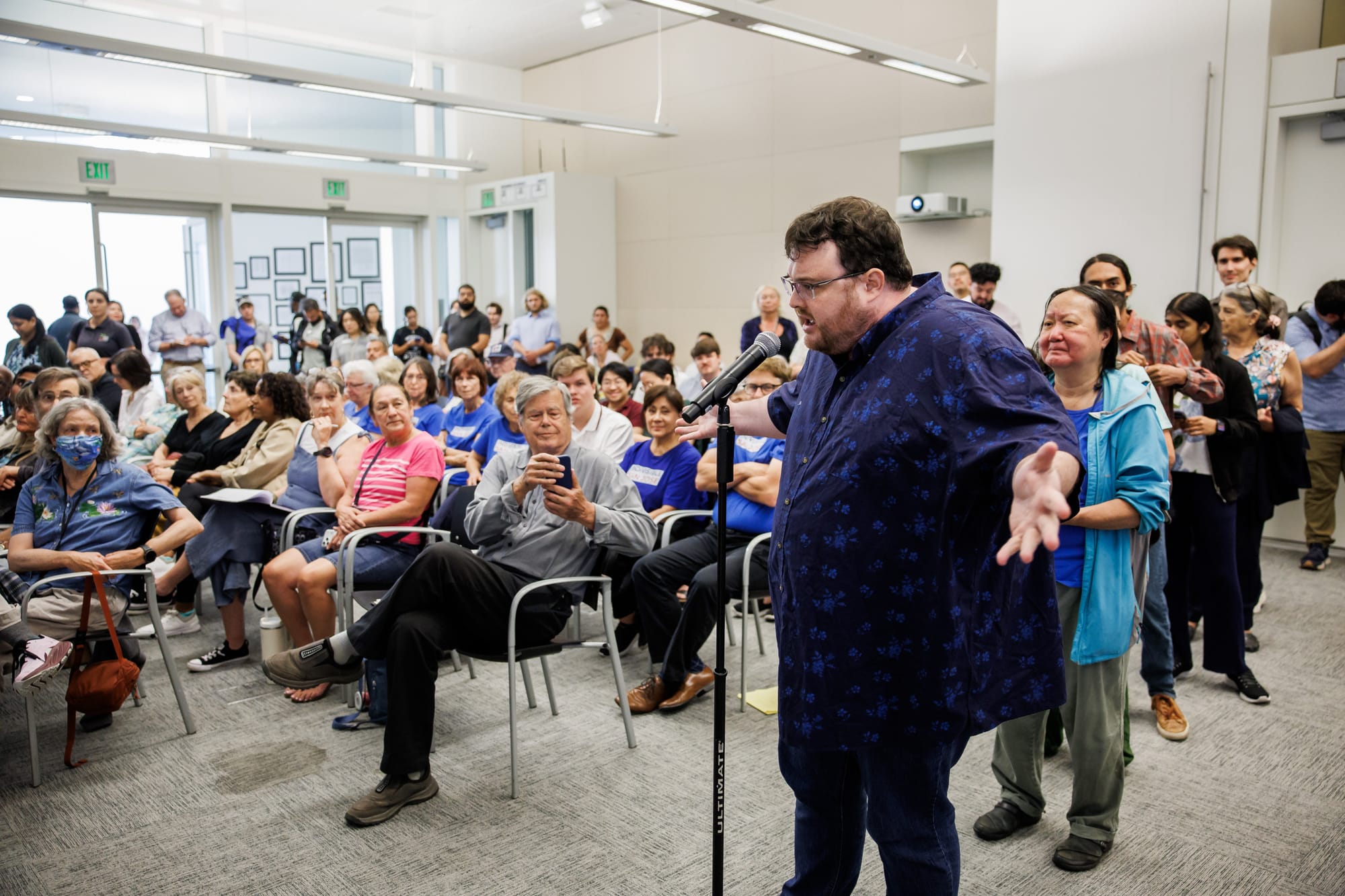
Example Community: Gilroy, California
In Gilroy, California, the administrative approval of a 438,500-square-foot Amazon data center on former farmland sparked public debate after construction began on the facility. According to the San Jose Mercury News, municipal staff originally approved the project under a decades-old development rule that did not require a public hearing before the City Council. Although Amazon purchased the parcel in 2020 and completed a years-long environmental review, many residents reported learning about the project only when work commenced on two warehouses, each approaching the size of four football fields.
Gilroy's Procedural and Regulatory Reforms
In response to public demands for increased oversight, Gilroy officials adopted new notice and review requirements for large-scale developments. As reported by the San Jose Mercury News, commercial and industrial proposals measuring at least 15,000 square feet must now hold a community meeting, notify property owners and residents within 1,000 feet, and publish notices in local newspapers. Additionally, projects that require an environmental impact report must now receive approval from the Planning Commission rather than being cleared administratively by city staff.
Addressing the rule changes, Councilmember Dion Bracco stated,
"We need to be going through and changing the rules now, not wait until it's too late."
Despite these updated requirements, numerous residents continue to press the city council to halt data center projects entirely, attending public meetings with green signs reading "No Data Centers in Gilroy."
Strategies and Policy Approaches from Companion Communities
Local and state governments across several jurisdictions are utilizing varied statutory mechanisms to regulate data center development, ranging from statewide executive pauses to municipal working groups and regional economic analyses.
Statewide Moratoria and Executive Orders: In New York, Governor Kathy Hochul signed an executive order establishing a one-year statewide moratorium on new hyperscale data centers, according to ABC7 Chicago. The order temporarily halts state permitting for large facilities while regulators formulate standards for power consumption, environmental protection, and water usage. State Senator Kristen Gonzalez supported the initiative, stating,
"If Big Tech is coming onto our turf, it should be on our terms."
While the state legislature had passed a moratorium bill, executive officials described it as complex and opted for an immediate executive order instead. By contrast, a statewide moratorium proposal in Maine was previously vetoed by Governor Janet Mills due to concerns over blocking a proposed center in a town affected by a paper mill closure.
Zoning Reviews and Citizen Advisory Panels: In Bulloch County, Georgia, county commissioners considered a text amendment that would have prohibited data centers in unincorporated areas. As reported by WSAV News 3, the board reached a 3-3 vote, prompting Chairman David Bennett to cast the deciding vote against the ban. Bennett stated that a outright ban was not legally defensible and argued that smaller "edge data centers" could provide tax revenue without severely straining infrastructure. During the proceedings, Commissioner Nick Newkirk presented findings from a visit to a Memphis data center, where he registered a 60-decibel noise level in an adjacent neighborhood, and cited primary election results showing over 75% voter opposition to local data centers. Following the vote, commissioners unanimously approved creating a 21-person working group—with three members appointed by each commissioner—to review draft zoning ordinances. Bulloch County maintains an existing permit moratorium through December 31, 2026.
Infrastructure Costs and Economic Evaluations: Broader public sentiment reflects significant caution regarding facility sitings. Writing for timesfreepress.com, commentator Ron Hart cited polling indicating three in four Americans oppose data centers in their local communities, driven by concerns over aquifer depletion, electrical grid stability, ambient noise, and farmland conversion. Evaluating these tradeoffs remains a key task for local planners. In a report covered by WHYY, Keystone Research Center Executive Director Bernie Gallagher noted that while data centers offer multiyear construction jobs, officials must determine which projects provide
"enough lasting value to justify extraordinary demands on electricity, transmission, water, land and infrastructure."
What Remains Undecided
Key regulatory frameworks and legislative proposals remain under active consideration across these regions:
First, in Gilroy, the city council has not decided whether it will consider a full moratorium as requested by residents. Meanwhile, the San Jose Mercury News reports that the California Legislature has sent seven data center-related bills to Governor Gavin Newsom focused on ratepayer protections, environmental review requirements, and energy and water usage disclosures.
Second, under New York's executive order, state regulators must establish specific environmental and utility standards during the one-year pause before state permitting resumes, according to ABC7 Chicago.
Third, in Bulloch County, Georgia, the newly formed 21-person working group must evaluate draft zoning ordinances and present feedback to the board before the county's temporary permit moratorium expires on December 31, 2026, as detailed by WSAV News 3.