
Considering Moratoria for Data Center Development
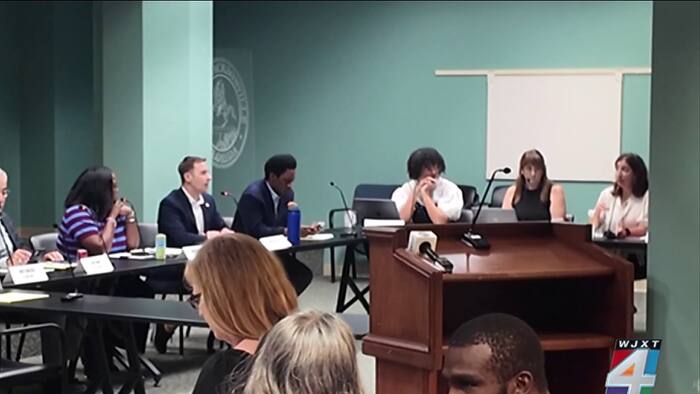
Jacksonville, Florida, is currently engaged in discussions regarding the potential impacts of hyperscale data centers. City Council members, JEA officials, and city planners convened to address residents' questions about what a large facility could mean for Jacksonville (News 4 Jax). JEA, the local utility, has received 50 inquiries about data centers but does not currently possess the capacity to serve a hyperscale facility, which typically requires at least 50 megawatts of power. JEA's interim chief administrator, Jordan Pope, indicated that a new substation would be needed to serve such a large-scale facility (News 4 Jax).
If a hyperscale data center were to locate in Jacksonville, city planners anticipate it would be treated as a light industrial use and proceed through the Planned Unit Development process. However, some City Council members are advocating for additional safeguards. Councilman Jimmy Peluso suggested exploring a lower power threshold for review, possibly 25 or 30 megawatts, instead of the typical 50 megawatts for hyperscale facilities (News 4 Jax).
Residents voiced concerns about water usage, potential pollution, noise, and whether existing JEA customers might bear the costs of infrastructure improvements. State legislation mandates that large electricity users pay the full cost of new infrastructure required to serve them, preventing these costs from being shifted to existing customers. Councilman Peluso also proposed a possible moratorium to allow the city time to research the issue and determine if new regulations are necessary. He suggested forming a working group comprising City Council, the Planning Department, and JEA to develop a comprehensive policy. The stated goal is to foster collaboration among the council, administration, JEA, and community stakeholders to understand both the opportunities and challenges before any major project is proposed (News 4 Jax).
Strategies from Companion Communities
Several other communities have implemented or considered moratoria and other strategies to address data center proposals:
South Elgin, IL: The South Elgin Village Board unanimously approved a 12-month temporary moratorium on new data center construction. This decision followed a public hearing where the Planning and Zoning Commission recommended the moratorium. Village President Steve Ward noted that while the technology is rapidly expanding, courts tend to disfavor lengthy moratoria. The moratorium allows staff to evaluate the potential impact of such facilities. This action came after significant resident opposition in August to a company's proposal to annex land for a data center, which the village board subsequently rejected (Chicago Tribune). Neighboring Elgin is also considering a 12-month moratorium, with its Planning and Zoning Commission voting to recommend it to the city council (Chicago Tribune).
Oakland, CA: Oakland's City Council unanimously passed a 45-day moratorium on new data center approvals. This measure, sponsored by Councilmember Carroll Fife, allows city officials to study the potential effects on water supplies, the electrical grid, and air quality. The vote followed protests and community input during the council meeting, with water consumption being a significant concern due to the demands of some cooling systems (SFist - San Francisco News, Restaurants, Events, & Sports). San Francisco's Board of Supervisors also unanimously approved a 45-day moratorium, which immediately halted new data center development and expansion of existing facilities. This period is intended to allow the Planning Department to examine impacts on water use, energy demand, air quality, and land use, and to develop a clearer definition of data centers. The moratorium can be extended for up to 22 months if significant environmental impacts are identified, allowing officials to consider permanent controls or a potential citywide ban (SFist - San Francisco News, Restaurants, Events, & Sports).
Spartanburg, SC: A lawsuit filed by the Southern Environmental Law Center (SELC) against Spartanburg County and a data center developer was dismissed by State Circuit Judge Derham Cole Jr. The SELC, representing residents, accused the county of violating its land management ordinance by permitting the data center and an adjoining 457-megawatt natural gas power plant as two minor developments instead of a major one. The county maintained that its Unified Land Management Ordinance (ULMO) defines major developments specifically, and data centers are not included, thus classifying them as minor. The judge ruled that the plaintiffs lacked standing to sue, stating they had not been "specially damaged" by the construction, despite concerns about noise, dust, traffic, and disruption. He also noted that the plaintiffs failed to exhaust administrative remedies by not appealing the initial permit decision within the 10-day window (Post and Courier). This contrasts with a separate case where the county's decision not to grant a permit for another data center was upheld by the board of zoning appeals, citing the county's then-pending data center moratorium (Post and Courier).
Atlanta, GA: In a gubernatorial debate, former Atlanta mayor Bottoms called for a pause on new data centers to allow local governments and communities time to draft policies. Her opponent, Jackson, stated he would only support data center proposals with local backing, adherence to federal environmental standards, and community benefits such as reduced energy bills or property taxes for residents (Axios).
What Remains Undecided
The long-term regulatory frameworks for data centers in many communities remain under development. While moratoria offer temporary pauses for study and policy formulation, the specifics of future zoning, environmental regulations, and community benefit agreements are still being debated. The legal challenges faced in Spartanburg highlight the complexities of existing land use ordinances and the criteria for establishing standing in legal disputes. The varying durations of moratoria, from 45 days in Oakland and San Francisco to 12 months in South Elgin, reflect different approaches to the time needed for comprehensive review. The question of how to balance economic development opportunities with environmental and community concerns, particularly regarding power and water consumption, noise, and infrastructure costs, continues to be a central theme in these discussions. The role of state-level intervention, as seen with Illinois Governor JB Pritzker's preference for legislative regulations over a statewide moratorium, also adds another layer to the evolving landscape of data center governance (Chicago Tribune).